Friday, November 24, 2006

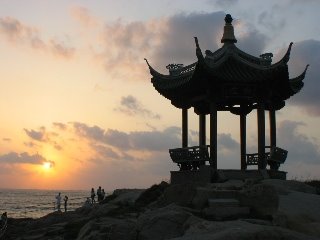
Enchanting Lijiang

The city of Lijiang, in China's southwestern Yunnan province, is a fascinating place. We spent a full week here and in surrounding areas from October 30 to November 6. Lijiang is the longtime home of the Naxi (pronounced nah-shee or nah-hee) minority. The town itself is a maze of narrow stone cobbled lanes and small canals which until recently provided the residents' drinking water. It's strictly pedestrian traffic in the old city - no cars - which makes it pleasant to simply stroll around for hours - or even days.


Although the place is heavily touristed, it nonetheless has great deal of charm. Among the hundreds of souvenir shops that fill the ancient buildings are quite a few with really interesting, locally produced arts and crafts. In many cases, you can watch the sculptors, artists and weavers at work. The wood and mud brick Naxi architecture in the city center fared quite well when a strong earthquake hit the town in 1996, killing hundreds and leveling most of the newer concrete structures outside the old town. It's now a UN World Heritage site - well deserved, I'd say.

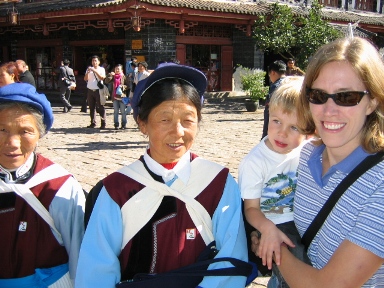
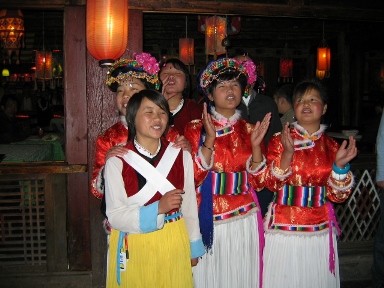
Many of the old women wear traditional Naxi clothing, and the pubs lure Chinese tourists with groups of women singing in traditional garb.


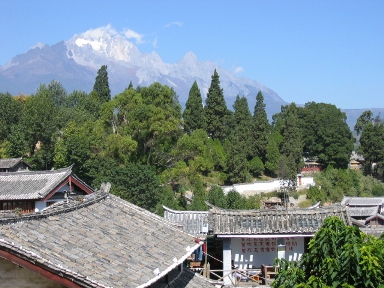
There's also the stunning backdrop of Yulong Xue Shan (Jade Dragon Snow Mountain) to add to the town's majesty. This Himilayan peak rises above the city to an elevation of 5500 meters (somewhere around 18,000 feet). One other enticing feature Yunnan can boast compared to China's crowded east coast - blue sky!


Tuesday, November 21, 2006

$7 Guiness in Hangzhou

It's tough to find good beer in Hangzhou, so when I do find it, I'm willing to pay a premium. Seven bucks (58 RMB) for a pint of Guiness does seem a bit steep, though. That's what I paid for liquid dinner tonight at the Night & Day bar on Hangzhou's main drag for nightlife, Nanshan road, along the shore of West Lake (Xi Hu). Along with six of my colleagues, we arrived at about 8 pm, and we were the only patrons in the pub. After an inexplicably long debate with the server about how to seat 7 people in a completely empty bar, we settled in to relax. Another prolonged Mandarin conversation resulted in one pint of frothy Guiness for me, and 6 empty glasses for the rest of the crew. No matter how much I sang the praises of the liquid gold from Ireland, my Chinese colleagues refused to join me in partaking such a hearty brew. A few moments later, a wooden mini-keg of sufficiently light and easy-drinking Tiger beer arrived at our table for my compatriots.

The atmosphere here is interesting. Electronic club-ish music, in English, fills the room -- loud, but not quite loud enough to require shouting. One TV shows Chinese basketball, and another displays some dancing girl show that seems like it could only have been staged in Vegas, featuring topless dancers in wild feather dresses, juggling magicians, and crococile wrestlers. A bit later, a 4-person band takes the stage, consisting of one caucasian keyboardist and 3 swaying Chinese vocalists performing covers of western tunes in English and phonic Espanol.

Want a shot of whiskey? They've got Jack Daniels and Johnny Walker black label, not to mention Macallan 12-year Scotch, but you've gotta buy the whole bottle. No single servings here, mister. No worries if you don't finish it. Just take your claim check, and they'll keep your bottle safe and sound for you to return and finish some other day. If a pint of Guiness costs $7, you can bet a full bottle of quality imported Scotch ain't cheap.

If the tunes aren't enough to keep you entertained, never fear! They've got Chui Niu, which literally translated means "blow cow". A better translation would be "blow your own horn". This is a dice game where two players each roll 5 dice in an overturned cup, then one player declares how many of a particular number he/she thinks are showing. The opponent can choose to agree with the count, call "BS", or raise the number. Whoever gets caught bluffing or guesses the wrong count must take a drink as punishment. Never a dull moment.

Saturday, November 18, 2006

Yellow Mountain - chapter 2

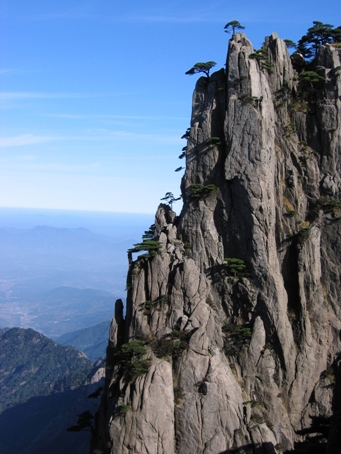
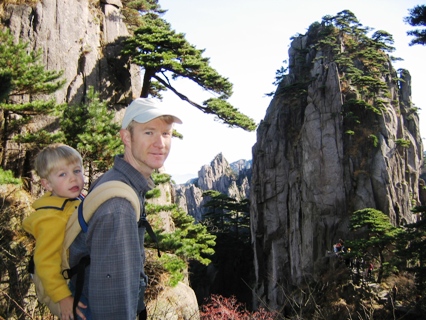
Amy already blogged about Yellow Mountain (Huang Shan), but I want to share a few more photos and stories about this site, with it's impressive Yosemite-esque geology, and throngs which put Yellowstone on the 4th of July to shame. We stepped on a public bus in Hangzhou with about 10 of my colleagues from the US and China, and heard a short speech about and the bus rules, which prohibit smoking. Of course, the speech was in Mandarin, but my colleague translated this one bit of welcome news for me. But alas, I as I've mention before, the Chinese aren't much for rules, and a few blocks into the ride, out came the cheap cigs. The offending passengers graciously agreed to snuff out their smokes, but a short while later, the foul odor began again. I walked the length of the bus, but couldn't find any lit cigarettes. "Did someone light up and finish it off in a few short drags?" I thought to myself. A while later, the same thing again, but still I couldn't locate the culprit. Finally, I found him - sitting behind the wheel of the bus. After asking politely but firmly, Mr. bus driver stopped smoking. After that, we could sit back and enjoy the Chinese-dubbed version of the 1980's American B-movie Ministry of Vengeance on the bus video monitor. Don't rush out to your local video store for this one folks - I'm pretty sure English dialogue wouldn't have made it any better.

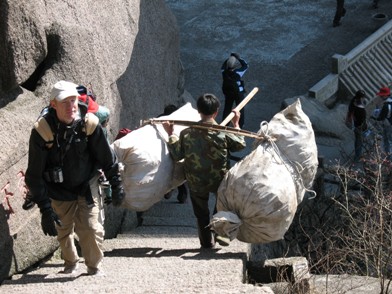
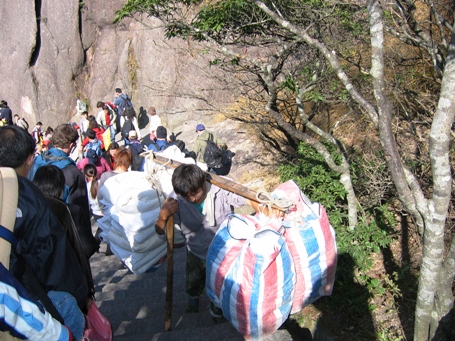
But I digress - this was supposed to be about awe-inspiring mountains, wasn't it? For starters, let me provide some context. Hiking in China means tromping on stone stairways, not primitive trails. It also usually means cable cars, which hoist throngs of chain-smoking Chinese tourists to heights which would otherwise be inconceivable. The local government sure is getting their piece of the action, charging an exorbitant 200 RMB ($24) for the privilege of setting foot on the mountain, and the cable car costs another 65 RMB ($8) - one way! That's a small fortune for the average Chinese person, folks. The only common folk who are gonna hike Huang Shan are the porters who ferry food, drinks, kerosene, and hotel linens up and down the 5000+ vertical feet of stone steps. It's actually cheaper to pay people to carry these goods up and down on bamboo poles than to load it into the cable cars. Even 30 feet long steel rebar is carried up on porters' shoulders. Unbelievable.

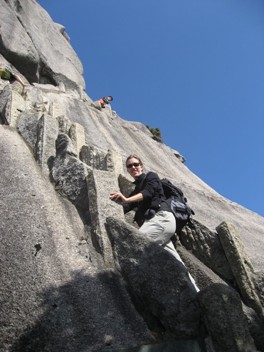
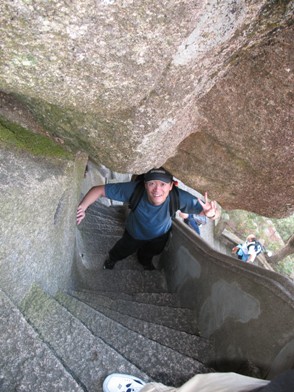
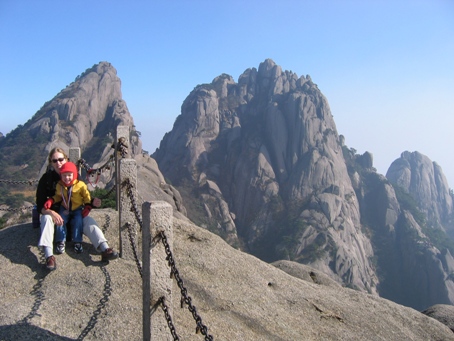
Did I mention steps? These aren't your ordinary steps. You see, the granite crags here are nearly vertical in spots, so the Chinese actually carved steps right out of the granite. Amy and my co-worker, Spring Chen, demonstrate the trails in these photos.


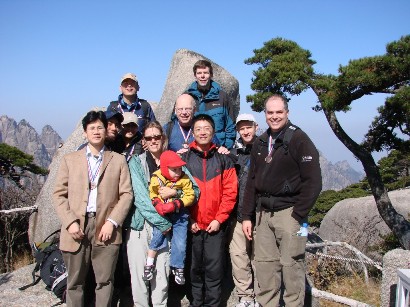
Our group actually earned the summit by hiking the whole mountain, and it was well worth it. The steep climb was breathtaking, and so was the scenery. But possibly the best part was that the difficulty of the climb kept the throngs at bay, so we could enjoy the hike in relative peace. The summit of Celestial Capital Peak, at 1810 meters, was a worthy destination for our BoldTech group.


Just below the summit, as we ventured toward the growing crowds, is a narrow fin of rock known as the fish back, which is no place for anyone who fears heights.


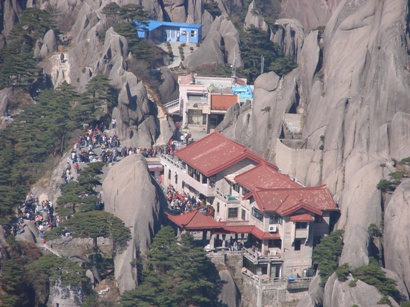
Did I mention crowds? We're actually fortunate that it's mid-November. A few months ago foot traffic was so heavy that a rail divided the main trails to separate each direction of traffic, and police patrolled the trails to force people to move along.


But there's a good reason so many thousands of Chinese visit this place on any weekend. It's simply spectacular. No wonder it has inspired generations of Chinese artists and adventurers.

Xian - the city that never sleeps

Xian (a.k.a. Xi'an and pronounced Shee-ahn) is a large city in central China where we spent the first 2 days of our recent vacation. We stayed at the Melody Hotel in the heart of the city, with a room overlooking the central square, the ancient Drum Tower, and the traffic noise that was still going strong at 3 am. Xian is most famous as the base for journeys to the nearby Terracotta Warriors, but it's an interesting city in it's own right, at least for a few days of sight seeing. Xian has a long history and interesting architecture - it's one of the few Chinese cities to keep it's ancient fortification walls intact. These massive walls form a 13 kilometer rectangle around the heart of the city, with just 5 or 6 gates letting traffic in and out. We went for a stroll on the walls, which gave a decent view of the smoggy, crowded city. The best thing about it, perhaps, was the 40 RMB ($5) entrance fee that kept it nearly deserted and offered a rare respite from the throngs that one must face almost everywhere in this country.


The city has a sizeable muslim population concentrated in one section of the city center, offering a different variety of restaurants and shops than we're accustomed to seeing in china. The big mosque here is interesting primarily because it looks no different, from the ouside anyway, than the many Buddhist temples we've seen in China.

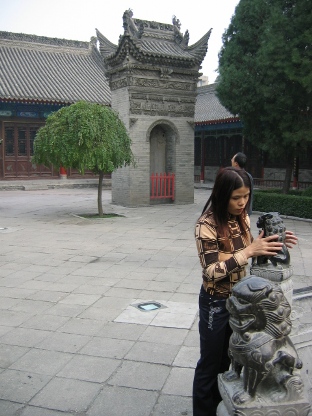
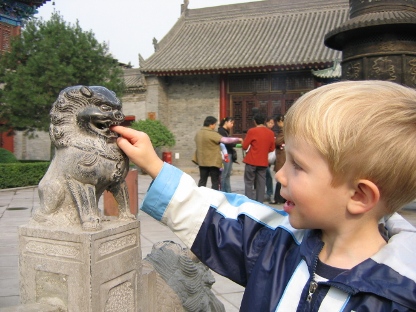
We also visited the Taoist Temple of the 8 Immortals, which outwardly is also nearly indistinguishable from the Buddhist temples. The visitors' rituals of incense burning, kneeling, and making offerings are similar, too. The subtle differences, though, made it a worthwhile visit. For example, several women were rubbing each of 8 stone lion statues surrounding a small pool of water.

Andrew enjoys playing with the lions, too.


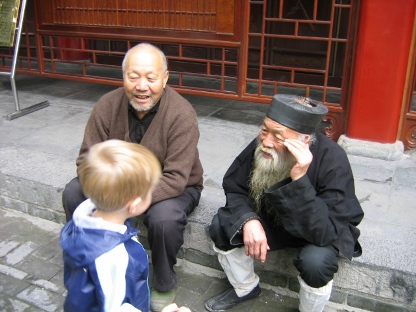
It was also interesting to see the Taoist practitioners in their traditinoal garb and long beards, such as this old man.


The antique market, just outside the temple, is an unbelievable crowded affair where hundreds of individual seller display there wares on sheets of newspaper, laid on the ground, and crowds of shoppers jostle each other in the narrow aisles between these rows of goods. This market had everything from ancient Chinese coins (the ones with a square hole in the middle) to broken bits of dishes, to furniture.Many people pass right through Xian without stopping on their way to the Terracotta Warriors. If you have the time, I recommend spending one or two days in the city itself.

Thursday, November 16, 2006

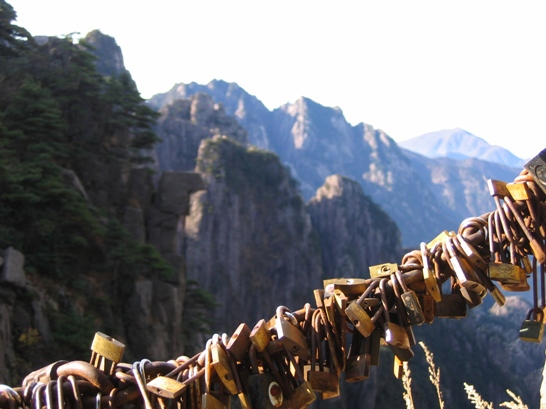
Love Lock

Isn't it sweet ?

Remember that episode of the Amazing Race where they had to find the lock that matched the key...


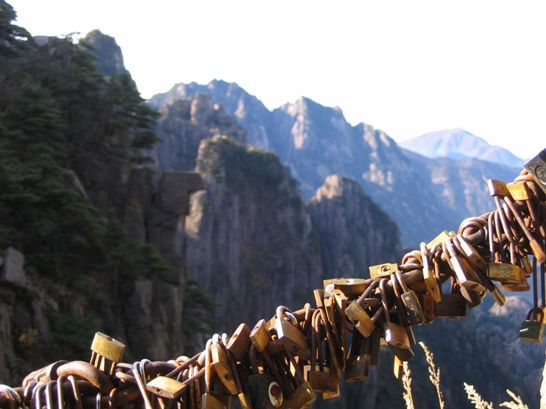
Brad and I had our names engraved on a love lock which is now affixed to a chain overlooking the Grand Canyon of Huangshan. The keys to the lock rest somewhere at the bottom of the canyon as they were promptly thrown over the edge as soon as the lock was in place. Guess we're stuck together for good now.

Wednesday, November 15, 2006

Yellow Mountain (Huangshan)


Yellow Mountain is an iconic Chinese mountain like many captured in the traditional ink brush paintings. It's rocky granite peaks rise straight up as if to touch the sky. Hiking up the peaks is an exhausting, but rewarding, experience, as each vista surpasses the last. To view the sunrise from the top of the mountain is a splendid thing. Islands of rock with a few clinging trees float in space above a sea of orange tinted clouds.

The orange of the sunrise is as bright as any you will see anywhere, enhanced by the pollution from nearby Shanghai. The hike up through bamboo forest is enjoyable as you weave through the many porters toting everything from clean bed sheets to watermelon to legs of pork and lamb to the hotels on top of the mountain. Our visit to Heavenly Capital Peak brought us into contact with our first tour group on the mountain, but crowding on this peak wasn't bad. After snapping some photos and purchasing a medal with Swanson engraved stating we had made it to the top we continued on our way to the main mountain top area.

In about a half an hour we reached the top of the cable car and any notions that we had of enjoying some peaceful hours in the Chinese wilderness were quickly dispelled. The scenery continued to be beautiful but actually seeing it through the tour groups that gathered at every lookout became more of a challenge. The crowding and noise (and this was the off-season)made the remaining two hour walk to our hotel less pleasant than it might have otherwise been but still worth the effort to see the sights. On the plus side, this seems to be the one place in China where no smoking rules are actually enforced. However, you can still smoke in the mountain top hotels which made the option of sitting in the 1RMB/minute massage chairs in the hotel lobby definitely out. I suppose they would have been great if you didn't have to breathe while sitting in them.

The worst $100 hotel

We went to Yellow Mountain (Huangshan) last weekend and stayed at a hotel on top of the mountain. The room cost around $100 per night, by far the most we've paid to stay anywhere in China. Given the location we weren't expecting it to be quite as nice as the Crown Plaza in Beijing ($55/night) but we were expecting it to be nice.

The room itself was like any room we've paid $15 to stay in elsewhere. The bed linens were clean, but not much else. It only cost $1 per hour for cleaning, so you would think that once a month or so they could wash the smashed bugs off the wall. How does a ceiling get dirty anyway?

If it couldn't be clean at least the staff could be friendly, right? Even Andrew didn't get great treatment here.

Finally, we only got 3 hours of hot water and heat a night. I may be a spoiled American, but for that kind of money I want a hot shower whenever. (Of course, like every other hotel room in China, the drains were backed up so when I did get my shower the bathroom flooded.)

I will give a thumbs up to the view from our room. We were lucky enough to have an East facing room so the view at sunrise was incredible. Since we hadn't had heat since 9:00 pm the night before even our room was chilly, but at least we didn't have to stand out on the breezy patio with the chain smoking Chinese tour groups to watch the sunrise.

Overall, I give a thumbs down to the White Goose (Bai e) hotel at Huangshan. There has got to be a nicer place to stay.

Wednesday, November 08, 2006

In China's Shadow

This op/ed piece by Reed Hunt -- In China's Shadow: US must change to compete -- published in the Denver Post, is an interesting viewpoint on globalization. Here's a preview:

China is now to the United States what the United States was to Europe in the 19th century: the world's biggest new market in terms of consumption and production and the place where standards of living are rising most quickly. China is the birthplace of firms with a chance to take leadership in every sector of the global economy.

So, is America up to the challenge?

Clash of civilizations?

In this post, I'm straying far from my normal subjects and venturing into the turbulent waters of politics and religion. My friend Steve Runkel sent me this link to an interview with Wafa Sultan broadcast on Al Jazeera television. She has an eloquent and intriguing viewpoint on the so-called clash of civilizations between the West and the Islamic world. She argues that it isn't a clash of civilizations, but rather "a clash between civilization and backwardness". I couldn't have said it better myself. View it for yourself here.

Tuesday, November 07, 2006

Blocking my blog in China

The Chinese government is doing it's best to block access to my blog, and maybe everyone else on blogspot.com, too. They often don't outright block access, but they slow down the response from "undesirable" web sites so much users aren't willing to wait, or the browser just times out.

Until recently, I've been able to get around this problem by viewing my blog on a proxy server at www.pkblogs.com/bradswanson. Tonight, though, even that site isn't working. Hopefully it's just a temporary issue.

Interestingly, I can almost always access blogger to create my blog posts, but then I just can't view them...

The Shanghai security incident

One of my co-workers, David Hastoglis -- a BoldTech vice-president, actually -- recently visited the Hangzhou office. On his return to Denver, I asked him to carry back some of the souvenirs and gifts we've purchased so we won't have so much to carry back ourselves. We gave him a bag full of gifts including several campy, decades-old Chairman Mao alarm clocks, where Mao's arm actually waves back and forth as the chairman beams his warm smile. It seems my innocent request led to an interesting incident at the Shanghai airport. Here's a transcript of my IM conversation with the aforementioned VP...

davidhastoglis: I got stopped leaving Shanghai to have my packages inspected.
Brad Swanson: doh!
davidhastoglis: I don't know why, but they didn't like the looks of large metal objects with alarm clocks next to them.
davidhastoglis: :0

Brad Swanson: ooooh - didn't think about that. sorry for the hassle

davidhastoglis: It was funny, because when they took me to the inspection room and took everything out they just couldn't understand why I would have alarm clocks that didn't work.
davidhastoglis: I told them I had the clocks because they were funny.

Brad Swanson: did they speak decent english?

davidhastoglis: They said "waht's funny about them" and I replied "They are chairmain Mao clocks".
davidhastoglis: The guy said "Waht is funny about that".

Brad Swanson: LOL!

davidhastoglis: I realized the error in my joke and said "nothing. it is funmy because they are old and don't work".
davidhastoglis: They let me go.
davidhastoglis: It wasn't a hassle but a funny story I thought.

Brad Swanson: just tell them we love Mao so much in America that we even want broken clocks with his image

davidhastoglis: Yep, you are sharper on the ball than me.

Brad Swanson: i'll practice my speech before i pass thru security on the way home
Brad Swanson: so i can say it with a straight face

Monday, November 06, 2006

Purple Haze

On most days, smog blankets Hangzhou. It's about a mile to the hills across the Qian Tang river from our apartment, and they usually appear only as dim, hazy outlines when I go for my morning run along the waterfront. It's certainly debatable whether vigorous exercise in this atmosphere does more harm than good. The dust that settles on our furniture and floor is dark, almost black. It could be worse, though. Coal-burning power plants have been relocated farther from the cities, and hydroelectric power lessons the soot in the air. Gasoline-powered scooters are verboten in Hangzhou and some other big cities, so folks ride along on eirily silent electric bicycles instead, cruising at around 20 mph. On the other hand, I heard one time that China doesn't impose emissions standards on auto manufacturers, presumably to keep the vehicles more affordable for the masses. Hopefully China is on a path toward a brighter environmental future, but don't count on blue skies and clear water any time soon.

Cheap cigs

Chain smokers, rejoice! For the low, low price of 2 Yuan ($0.25), you can get yourself a full pack of 20 foul smelling cancer sticks. Anyone who thinks he's getting decent tobacco for that price, though, is definitely smoking something.

Fortunately, the smoking habit here isn't quite as bad as other places - like Turkey, for example - where chain smoking is the national pastime.

Recycling

With millions of low income people across the country, there's no need for an official recycling scheme in China. Drop a plastic bottle on the street, and you can be sure someone will pick it up within minutes. There's an army of government-employed workers sweeping the streets and side walks who are eager to snatch up any recyclable material, and plenty of private citizens happy to do the same. Just a few weeks ago, the city installed trash and recycling bins around our neighborhood; so far, littering still seems to be the preferred method of disposal. Hopefully that will change with time.

Life and Death in Shanghai

If you're not familiar with the insanity and brutality of communist China under Mao Zedong, pick up a copy of Life and Death in Shanghai by Nien Cheng. This extraordinary woman survived to write the story of her 6 and a half years of imprisonment in China's cultural revolution of 1966-76. With the help of her Christian faith and mental strength, she steadfastly refused to make a false confession, tormenting her tormentors with her stubborn resolve.

After her release, she was closely monitored by neighbors, her party-appointed maid, old friends pressured to spy on her, and a "student" of hers (she taught English). All these people repeatedly set traps for her, hoping she would say something to incriminate herself. She eventually learned that her long ordeal was the result of the power struggle at the highest levels of the party, where Mao's wife, Jiang Qing was trying her best to discredit Zhou Enlai to secure her succession of Mao.

The communist party eventually declared the cultural revolution to be a flawed policy, but all the official blame was placed on Jiang Qing and her comrades in the so-called gang of four, sparing Mao the brunt of the blame and perpetuating his personality cult.

Sunday, November 05, 2006

There ARE stars in China

I was beginning to wonder if there were stars here. After being in China for 2 months I can't once recall seeing the stars. Through the haze of pollution and the lights of a large city they just aren't visible.

Last week we went to Lijiang in the Yunnan province and the very first thing we noticed when we got there were the stars.

It was a fabulous trip!

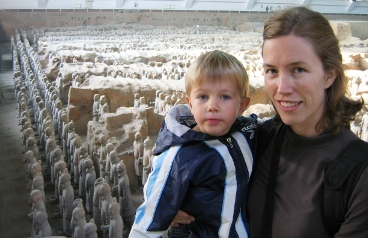
We spent two short days in Xian to see the Terracotta Warriors (see Amy and Andrew with the warriors in the background) and some other sights around the city. The warriors were cool but I actually enjoyed another burial site better. At the Tomb of emperor Han Jing there were also warriors, but they were only about 2 feet tall. He also had a whole bunch of animals and other daily objects in the burial grounds and the museum is brand new. You could get much closer to the dig site than at Terracotta Warriors and it was much less touristy. We took a taxi and arranged for a fixed price for the day; it was just under $40 for about 9 hours of driving us around.

After Xian we flew to Lijiang where we saw the stars. Lijiang has a great old town full of ancient houses and brick paved streets. At night paper lanterns light up the streets and the air turns crisp. It's maze of alleyways is blocked off from cars and canals run through the city making it very pleasant to walk around, especially if you get up early enough to beat the hordes of hat wearing Chinese tour groups. Since there are so many tour groups the old town is full of nothing but souvenir shops and restaurants, so a day walking around old town is plenty.

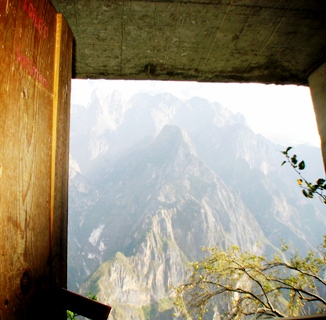
The highlight of our trip was a trek through Tiger Leaping Gorge. By some accounts this is the deepest gorge in the world. The gorge rises from the river at around 5700 feet to the mountains above at over 17000 feet. One fellow traveler asked us if gorge was derived from gorgeous or the other way around. In any case it was spectacular. Unfortunately, plans are underway to dam the valley and change the scene for forever. At this time of year I would guess that around 25 people a day (all but a couple of them being Westerners) start the 15k trek through the gorge so we were finally able to get away from the mobs of people that are everywhere in China. Every couple of hours there is a village of a couple hundred people with a guesthouse where you can grab a meal or spend the night. We hiked for 6 hours the first day and spent the night at Halfway House. Even the view from the common bathroom was amazing as evidenced by the picture through the door of the ladies room. We spent the whole next day lounging around Halfway House and exploring the farms in the village. On the next day we got a couple of horses and went up to 12000 feet or so for some incredible views of the surrounding mountains (picture above). We had climbed part way up Haba Snow Mountain and were looking across the valley at Jade Dragon Snow Mountain (Yu Long Xue Shan). Except for the horses and their owners not another soul was in sight. Incredible!

After the horse ride we walked an hour and a half to the next guesthouse which was on the road through the canyon. In the morning we descended to the middle rapids of the Jinsha river (an early stretch of the Yangzi) to be astounded by the torrent of frothing, bubbling, thunderous water. Andrew asked why it did that and I explained that a lot of water was trying to get through a small space. His very astute response was, "It's kinda like traffic."

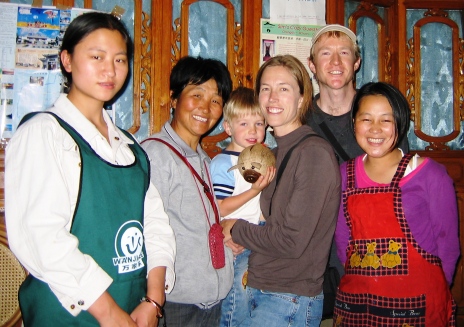
After this we returned to Lijiang and Mama Naxi's Guesthouse. I can't say enough about Mama's hospitality. I promise if you stay here you will not go hungry. Breakfast cost 25 cents and dinner (which is all you can eat, and then all Mama can coax you into eating so as not to offend) is only $1. There is no menu, Mama and her daughters and nieces just cook up a dozen amazing dishes and you eat what ever you like. In general we found the food in this region to be more salty and oily than elsewhere, and Mama's cooking was no exception, but for variety it couldn't be beat. Staying at guesthouses is a great option for us. There are several small rooms that face a courtyard where there is room to relax and socialize. This means that we can put Andrew to bed early and still enjoy the company and tales of our fellow travelers over a beer in the courtyard while keeping our room in sight and in earshot. It's more like staying with a family. Andrew had a great time playing with the dogs and cats and nieces while we were there. Before we left Mama gave Andrew a piggy bank made out of a coconut and many of Mama's guests gave him their coins to put in it. We had to promise to come back or at least send Andrew back when he is bigger.

Alas, we are back in Hangzhou and back to work.

Wednesday, October 25, 2006

Chinese Chips

Got a craving for Lay's potato chips? No problem - we've got plenty of those here in China. A hankerin' for Pringles? Got that covered too. Want some new and funky flavors? No worries! Here are your flavor choices:
  • Classic American
  • Texas Grilled BBQ
  • Mexican tomato chicken
  • French Chicken
  • Italian red meat flavor
  • Ziran steak (sorry, I don't know what/where Ziran is)
  • Cucumber
  • Braised pork ribs
  • Korean kimchi
  • Beijing duck (a.k.a. Peking duck)
Now I've got the fever for the flavor of the Pringles...

Tuesday, October 24, 2006

More Expectations and observations

Poverty: I've been surprised by how little poverty I've seen. I expected to see evidence of poverty everywhere I looked, but I've really not seen much at all. Even in some of the small towns we've been to the housing seems adequate and the slums (surely there must be some) are kept well out of view. The closest thing to a slum we've seen is the construction worker housing. The workers stay in temporary buildings which are sometimes little more than bamboo shacks on the property where they work. Once the building is complete they move on, it's not a permanent slum. We're going to the rural Western part of the country next week and getting away from the Eastern sea coast so we might see a different standard of living out there.

Men: In this patriarchal society little courtesy is shown to women. Men and women seem to fall into the same general categories of work as in the US. In Brad's office all the HR staff is women and 95% of the programmers are men. All the teachers in Andrew's day care women. However, there is no such thing as "ladies first". I've never had a problem getting a seat on a bus when Andrew was with me, but it is always a woman who gives her seat up for the lady with the baby. On the other hand, husbands and boyfriends don't seem to have a problem carrying their beloved's purse for them - even if it high fashion pink.

Bugs: I was expecting to see some nasty bugs here, and we definitely have some mosquitoes, but mostly the bug level is the same as in Colorado. I'm relieved that there are no cockroaches lurking in my less than spotless kitchen. However, I'm sure the bugs are kept in check by a less visible threat from insecticides.

Saturday, October 21, 2006

Funny signs & shirts

Rarely does a day go by in China without some amusing sign or a T-shirt catching my eye. Here's a few of the best ones yet.

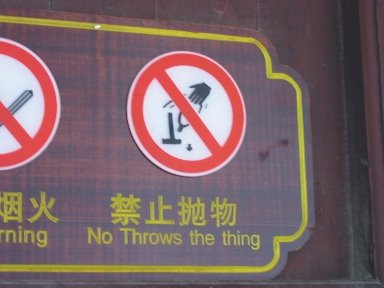
From a bell tower overlooking Beijing:

No throws the thing

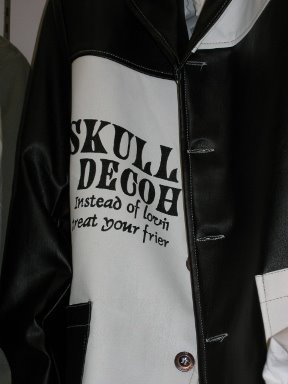
This one is from a jacket for sale at the Hangzhou train station:


Yeah, my photo kinda stinks, so here's the transcript.
Skull Dekoh: Instead of Lovin treat your frier
The thing that I find most amusing about that one is that someone managed to string together 6 seemingly random English words (ignoring the first 2) and create a phrase that is grammatically correct, yet nonsensical. Reminds me of Madlibs.

I spotted a woman right outside our office building at lunch one day wearing a T-shirt with text below (front and back, respectively). Unfortunately, I didn't have my camera.

de puta
Pablo Escobar, el magico

Ten bucks says she doesn't even realize it's Spanish, much less have any idea what it means.

And today, while hiking along a mountain ridge above Hangzhou, I saw a Chinese boy about 3 years old with a confederate flag on the front. Superimposed on the flag are the words:

It's a white thing. You wouldn't understand

I'm devastated that my camera batteries were dead today. I would've loved to get that photo!

Friday, October 20, 2006

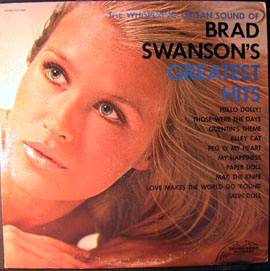
My Greatest Hits


For all my fans, this is the album you've been waiting for. Brad Swanson's Greatest Hits - all on one 33-RPM LP! Vinyl, baby - vinyl.

Wednesday, October 18, 2006

Fireworks at 6:15 a.m.

Fireworks are a common phenomenon here in Hangzhou, especially over the past few weeks. At first I thought it was for the National Day holiday, but I've since learned they're mostly for weddings. The groom often picks up the bride at her house in the morning - apparently as early as 6:15 am, at which point the family launches a noisy salvo of fireworks. The end of the wedding day seems to be another popular time to light up the sky -- 10:30 pm is a favorite time for these professional-grade displays which literally ricochet off neighboring apartment buildings. Don't plan on sleeping in - it's futile!

Pajamas in public

Take a stroll in the morning or evening in Hangzhou, and you're likely to spot women wearing pajamas - silk pajamas, usually. I've seen them doing exercises with fans and swords (tai chi?), strolling with friends, and even riding bikes. I remember seeing something on TV one time about the pajama fad in China, and supposedly pajamas are a status symbol; a way to tell the world "I can afford fancy clothes just for sleeping in!"

If you're in a high-rent district, wearing pajamas sends one more message: not only can I afford pajamas, but I can afford to live here.

Saturday, October 14, 2006

The Great Wall without the crowd

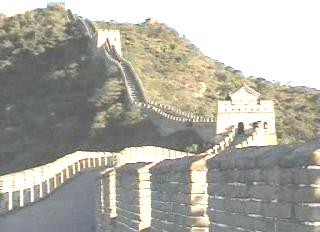
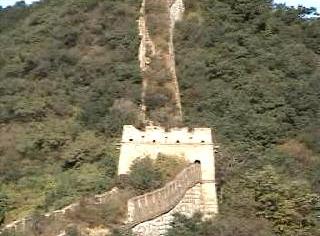
The crowded day at Ju Yong Guan left me longing for a more satisfying Great Wall experience, so I went back the next day, this time by myself - Andrew and Amy stayed in Beijing. I hired a driver to take me to Mu Tian Yu early in the morning, and arrived before 7 am. The souvenir stands aren't even open yet, there are only a handful of people in sight, and it's a beautiful, cool morning. This is the way to see the wall.


This section has been restored, just like Ju yong guan, but it feels older and more authentic. The scenery here is more spectacular, too, with steeper, rugged mountains.
I reached the highest point of the restored section, and the only thing between me and miles of ancient, unrestored wall is a flimsy sign reading "closed to tourists". Without so much as a chain across the stone doorway, this is practically an invitation for adventure and one which I definitely cannot resist. Besides, the Chinese ignore every other rule and sign anyway (no smoking signs, traffic signs, etc.) so why pay any attention to this one?

For the next few hours, I explored this rustic section of the wall by myself. Shrubs and trees are slowly reclaiming the walkway, and watch towers are partially collapsed. The wall stands about 10-15 feet tall, 10 feet wide, and it's constructed from huge stones and very well-made bricks. The large watch towers are only a few hundred yards apart - surprisingly close together considering the extra effort required to build them. The amount of manual labor required to construct such a massive structure in this steep, remote location is unimaginable.


Watch a 10-minute video of my adventure below.


Great Wall: Ju yong guan

For our first visit to the wall, we chose Juyongguan (Ju yong pass), a recently restored and very steep section of the wall closest to Beijing, partly because it's supposed to be less crowded than the Badaling site a few miles up the road. It's hard to imagine that someone else could be more crowded; for the first quarter mile or so here, it's shoulder to shoulder with police directing pedestrian traffic on the wall to keep it from grinding to a complete halt.


Fortunately, after a short way, about half the crowd gives up on the arduous hike, with some steps as much as 18 inches tall, and heads back down. Andrew had it easy, riding the whole way in an Ergo baby carrier on my back. Despite the crowds, we enjoyed hiking on a bit of (restored) history and the view from 1000 feet above our starting point.

The China Daily

The China Daily is the national English-language newspaper. No ads, and just 12 pages long. I expected it to be packed with commie propaganda, but instead it seems to be more focused on politically benign and often unimportant tidbits of news. Here's a sampling of some of their recent, earth-shattering front-page stories:
  • Free newspaper launched in Guangzhou [a city near Hong Hong]
  • Thai Princess unveils country's first royal blog
With just 1 page of international business news, they stick to the important stuff, such as
  • Joe Blow named new CFO of Progressive Insurance Co. [in the US]
That one really rocked the international markets!

Here's another good story: the Chinese government has launched a campaign to improve the manners of Chinese people travelling abroad.
Uncivilized behavior is becoming a real embarassment for China. Spitting and littering top the list of behavior among Chinese travelers.
Travelers are also being admonished not to talk too loudly and to respect queuing rules. Can't they launch this campaign in the homeland first? Please!

In the interest of fair and balanced journalism, there are a few things we Americans could stand to improve, too.
  • Look around - is anyone else in your host country wearing short-shorts, obnoxious T-shirts, plunging neck lines, or exposing their belly buttons to the world? No? Well then you shouldn't be, either. When in Rome...
  • I don't care how many people speak a little English so they can more effectively overcharge you for crappy souvenirs. Learn how to say at least "hello" and "thank you" in the local language

Tuesday, October 10, 2006

Old Mao good, new Mao bad

Our audio guide at the forbidden city described October 1, National Day, as the anniversary of the liberation of the nation; the day when Mao Zedong declared the founding of the People's Republic of China from the Meridian Gate at the forbidden city, the place where the famous, huge portrait of Mao hangs today. I expected a greater show of nationalistic fervor in the capital city of this single-party nation. The only noticeable signs of the holiday we saw, apart from the massive throngs of people, were a tiny number of people carrying cheap, paper PRC flags. No fireworks, even. There did seem to be a big crowd pouring out of Tiananmen square after the early morning flag-raising ceremony.

Back in Hangzhou, large fireworks displays were a daily occurrence near the holiday - as late at 10:30 pm and as early as 6:30 am!!! -- but I've learned that these are for wedding celebrations and have nothing to do with the holiday.

We did notice a number of people wearing red armbands, reminiscent of the Red Guards from the openly-despised Cultural Revolution of 1966-1976 which brutally supressed expression, culture, and religion. Most of the people wearing them were middle-age or older. Many of them were sweeping trash from the street and in the forbidden city, and a few of them were sitting and talking in front of their homes or small shops. I asked my co-workers about these folks, and was told the modern-day Red Guard are volunteers who agree to keep the city clean and safe. They're also somehow associated with the communist party, but my friends weren't able to quite explain how -- due to their limited English, not a reluctance to discuss it, as far as I can tell. I've openly discussed a few other politically sensitive topics with the Chinese, and they don't seem to shy away from it.

We hired a pedi-cab (rickshaw) driver to take us through Beijing's famous hutong, a complex web of narrow alleyways and crowded courtyard houses which at one time comprised most of the city. He spoke very limited English, but was able to clearly communicate his disdain for the cultural revolution. Interestingly, he had mixed feelings for Mao himself, the ultimate architect of the cultural revolution and the 1958-1960 Great Leap Forward, a soviet-style economic experiment which was at least partly to blame for the starvation deaths of an estimated 30-60 million Chinese. The pedicab driver's quote:

Old Mao good, new Mao bad.

Sunday, October 08, 2006

Living in an authoritarian state

It's sometimes easy to forget that I'm smack dab in the middle of an authoritarian state. Capitalism is sweeping China, but democracy and human rights are not. The Newsweek article Silent Games is grim reminder that I have no freedom of speech here, and the government exercises tight control over what information I can get my hands on. Fortunately, the internet is difficult to completely control. I can read the Newsweek article, for example, and western news outlets like CNN are accessible on the web, too -- at least today it is.

Google on the term police state, and the first link is the wikipedia entry. Somebody wanna let me know what it says? I can't read it because the wikipedia site (which is a fantasic, free on-line encyclopedia) is blocked in China. No doubt the entry on Tiananmen Square isn't too flattering to the People's Republic.

Expectations

China is very different from my expectations. Having traveled through Thailand, Cambodia, and Laos I had expectations of what an Asian country should be like and China is very different.

Rules: I had expected that a country with an authoritarian government would be populated with people who are used to following rules and regulations. It seems that as long as you stay out of politics there is very little you can't do. Go ahead and smoke in front of the no smoking sign, only Andrew will ask you why you are smoking when the sign clearly says not to. Ride your bike over the bridge with the huge sign with the slash through the picture of a bike. And it is most definitely not a problem to pass a police car on the shoulder of the road while going double the speed limit.

English: I expected more people to speak more English. There is usually someone around to help translate when it is necessary and if there is really a problem we can use the cell phone to call one of Brad's co-workers to translate, but your average waiter or salesperson does not speak English. When we were traveling before finding someone who spoke English was never a problem. I think this largely has to do with being on the tourist circuit. We did not have this problem in Beijing, but we were in an area heavily traveled by foreign tourists.


Clothes: Apart from costumed waiters at theme restraints and on tourist boats the only people I have seen wear "traditional" clothes are monks. People wear western style clothes and I have no problem finding any style I want from sweatpants to couture. What is different is the way people match their clothes. People's shirts are often very loud and flashy and women's shirts frequently have beads or sparkles. It's no problem to wear that orange shirt and purple pants together. In SE Asia it was more common to see people in traditional or at least partly traditional clothes.


Shoes: My comments on shoes are largely the same as clothes but bear special mention in that most Chinese women are slaves to fashion. There are tablets at the Great Wall with a quote from Mao stating, "You are not a man until you have climbed the great wall". What if you do it in high heels? You're probably not a man, but it's a feat I witnessed none the less.

Buildings: While the palaces and temples of Beijing are colorful they don't hold a candle to the flashy temples of Thailand. Though there is more splashes of color and intricate designs in the architecture surrounding Beijing the buildings elsewhere are more reminiscent of East Germany, utilitarian rectangles. Very functional, but not very pretty. Most of the newer buildings (which in Hangzhou is many) have more style with curves and key holes and other modern flair, but there is very little of what I would consider "Chinese" architecture.

Shopping: I was prepared to buy our daily goods at an open air market. There is no need, I simply walk a block to the local chain grocery store to get my everyday goods. If I want something exotic, like cereal or low fat milk, I just take the bus downtown to Carrefore (a French chain similar to Super-Walmart).

I'm surprised by how much my life is the same. Andrew goes to school and I work. In the evenings he plays with the neighbor kids before or after dinner. Brad goes to work every day. I go shopping for food and clothes. The biggest change is that we don't get to see our extended family regularly. Also, I feel really uninformed. We listed to radio streamed on the internet over breakfast and every now and then I checkout MSNBC online, but I don't get nearly as much US or international news and I can't understand the local news.

Saturday, October 07, 2006

Beijing's Forbidden City

Our first stop in Beijing is the vast palace grounds for two dynasties, the Ming and the Qing (pronouced ching). This opulent and heavily fortified palace was the exclusive domain of the emperor, his family and his entourage of officials, concubines, and eunuchs for 500 years. Today, it's official name is the Palace Museum and it's open to the masses for a small fee. The massive Meridian Gate (below) guards the southern end of the compound.


The grandiose site names are guaranteed to instill awe, and perhaps a few chuckles too:
  • The gate of character cultivation
  • The gate of divine military genius
  • Hall of preserving harmony
  • Hall of supreme harmony
  • Palace of earthly tranquility
  • Palace of abstinence
The last one at least has an interesting story. Prior to certain ceremonies, according to our British-accent English audio guide, the emperor was compelled to abstain from onions, garlic, alcohol, and sex -- no doubt a difficult proposition with the harem right next door. Interestingly, the emperor actually increased his consumption of meat during the period of abstinence in order to increase his strength for the impending ceremony.

All the buildings in the forbidden city are capped with yellow roof tiles; this color tile is reserved only for the royal palaces and sacred temples.


This photo shows a sample of the fancy artwork adorning the temple structures.

Friday, October 06, 2006

Night train to Beijing

Last Saturday (Sept. 30) we took the non-stop overnight train from Hangzhou to Beijing. Via airplane, we would have lost at least a half day each direction, but with the train, you travel when you'd normally be sleeping anyway. You sleep on a comfortable bed, and wake up at your destination, relatively refreshed and ready to go. Except for the few passengers who ignore the no smoking signs, I have no complaints.

Andrew had fun playing with a 9-year-old girl who shared our compartment. Andrew and Betty (her English name) had lots of fun running up and down the corridor. Andrew sang while she played Twinkle Twinkle Little Star on her flute. In the morning, after saying goodbye and walking thru the train station, we came across a distraught Betty who was in tears because she had to leave Andrew. He's breaking hearts already.

We're staying at the Crowne Plaza in Beijing, a 5-star hotel and one of the nicest hotels I've ever stayed in, for only $65 a night. Gotta love it.

The cafeteria

One of the 'perks' of our office in Hangzhou is daily free lunch served in the building cafeteria. This seems to be common practice at large office buildings. Think back to your high school or college cafeteria and imagine if it was located in a dreary windowless basement (dungeon?) and you'll have a good idea what it's like. Get in line, get a tray, point to what you want, and someone with a hair net and surgical-type face mask (a legacy of the SARS outbreak?) dishes up a portion of the mediocre fare.

In an unexpected capitalist twist, they have 2 companies serving grub competing for your business. At least there's some incentive to make the food decent.

This is one case where the setup in Bangalore (where I spent 3 weeks with my last job) was far superior. There, the company hired a catering company to fix a tasty lunch every day just for the 30 or so people in our office.

Dining in China

Dining in China is usually done family style, and round tables dominated by a lazy suzan are common. Dishes are brought to the table in random order throughout the meal; just when you think you're finished another one appears. The plate of melon slices is the only sure way to know that your dining experience has come to an end. Unless the dish is a soup, your own chopsticks also double as serving utensils, so you can't be too squeamish about your neighbors' chopsticks touching the food.

Chopsticks are a fun novelty for the occasional visit to a Chinese restaurant back home, but let's be honest -- unless you're eating sushi, forks are the way to go. Have you ever eaten a serving of soy beans, one at a time, with chopsticks? Or how about soft, slippery tofu? The Chinese have a short cut for these situations - hold the plate to your mouth and shovel it in with your kuaizi (Mandarin for chopsticks). Loud slurping sounds are perfectly acceptable, especially for long noodles, by the way.

You had also better get used to bones. Fish, poultry, frog, pork, beef -- it's all served with plenty of bones. Whole bone-in chicken is commonly chopped into half-inch cross-sections, so dodging jagged bits of bone is a necessity with every bite. (Anyone remeber the Simpons episode where each of box of Krusty O's cereal features a bonus of jagged metal Krusty O's?) Many types of fish are so packed with annoying little bones that's it's just not worth the effort to eat - especially with chopsticks. In another case of western ettiquete clashing with eastern, the Chinese seem to favor the technique of spitting out the bony bits after chewing.

Sunday, September 24, 2006

Putuo Shan: Buddha mountain

We joined a group of my co-workers last weekend for a visit to Putuo Shan, which translates to Buddha mountain. The Chinese pronunciation of Putuo is actually very close to the English pronunciation of Buddha. Putuo Shan is a mountain, but more importantly, it's also an island. It's beautiful, loaded with ornate Buddhist temples, and by Chinese standards anyway, it's unspoiled and not too crowded. There are crowds of tourists, for sure, but the island in general has a slow pace and relaxed vibe that's a welcome change from the hustle of the cities.

The first night of our tour was spent in Zhou Shan (pronounced Joe Shahn), a larger island en route to Putuo Shan, in a rather seedy $15-per-night hotel on the waterfront. Our Chinese friends arranged the whole weekend's itenerary, so I presume this might be typical accomodations for this type of weekend getaway. We enjoyed a late meal under a tent on a mile-long row of seemingly identical outdoor seafood restaurants. The sign on each identical tent reads Seafood Night Snack. For our second night, on Putuo Shan itself, we were relieved to find the hotel had a very nice, almost luxurious lobby, but our hopes for an equally nice room were quickly dashed. We had to settle for a musty smelling, ant-infested room. Nevertheless, I'm grateful to my friends who arranged everything, and I figure I would have ended up with something even worse if I had tried to arrange it myself. It's all part of the genuine Chinese experience, as far as I'm concerned.
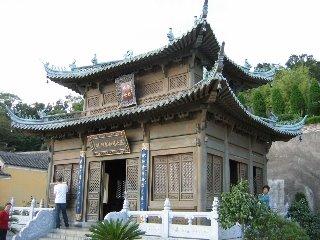
Of the dozens of temples we saw, most were centered around a large golden statue of the Buddha or some Boddhisattva (a figure who is on the path to enlightenment -- a future Buddha), the most important one here being Guan Yin, which is a feminine character representing compassion. At each temple, visitors lit incense, prayed, offered gifts and donations, and performed rituals designed to bring good luck, health, or wealth. One of the more memorable scenes for me was a group of Buddhist nuns gathered in a room near a temple, doors wide open, counting a mountain of cash from all the donations, in plain sight of the tourist mob. No bullet-proof glass here!

An interesting note is that the ubiquitous pot-bellied, bald-headed Chinese "Buddha" figure is in fact Hotei, another Boddhisattva whose image was apparently inspired by an actual Chan monk from the Liang Dynasty. This site has an interesting summary of the various Buddha images.

Organized tours are popular here, and annoying. Mobs of Chinese follow their megaphone-toting tour guide to all the big sights, everyone wearing the same cheap hats; the tour companies give everyone the same hats to wear, presumably so it's easier for the megaphone-meister to corral his/her mob with a high-decibal verbal assault.


The island even has a few nice beaches -- with one caveat. The ocean surrounding the island, as far as the eye can see (which is many miles from the Shan-tops), is the color of a mudslide. None of the tourists here will get beyond knee-deep in the water, either. Andrew still had fun in the sand and surf, though, making a major spectacle of himself when he went face first into the shallow water, getting his shirt and underwear (makeshift swimsuit) soaked, and again when mommy stripped him to his birthday suit to rinse off the sand.

A vendor had a bungy-jumping contraption on the beach, and we haggled them down to 20 RMB (about $2.50) per person for a chance to harness yourself in and launch yourself up and down doing kung-fu special effects.
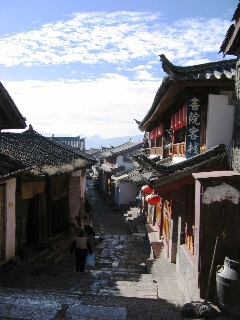
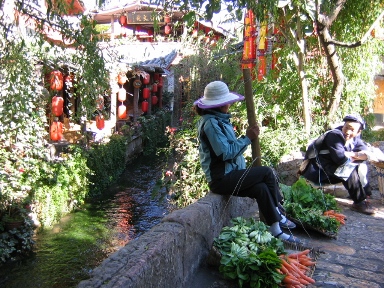
Nanxun: scenes from traditional China

On the weekend of September 16-17, we joined my co-worker Legend Chen (that's his way-cool adopted English name) and his girlfriend Laura on a trip to the town of Nanxun. It's small by Chinese standards, but it's still a bustling city of 50,000 plus, I'd guess. It's not listed in the Lonely Planet guidebook, which means it's a pretty out-of-the-way destination for Westerners, although it's apparently popular with the Shanghai crowd. It's only a few hours from Hangzhou, but the local dialect is different enough that Legend had trouble understanding the bicycle cab drivers. Laura grew up nearby here, and we met her friends Lu Yong Chong and his wife Summer, who live nearby and acted as our local tour guides.


The main attraction here is the old section of the city, dominated by a canal with old stone bridges, the oppulent former Governor's mansion, and a palace of sorts built by some silk baron's family. Lu Yong pulled strings to get us all free entry into the sites and took us to a nice restaurant for dinner. The Chinese are serious about Hospitality; Lu Yong was our host and everything was his treat. We offered to pay for dinner but I've learned that it's polite to graciously accept their hospitality and offer to return the favor later, rather than insist on paying.


At the silk baron's palace, Yu Long used his connections to get us a VIP tour of some rooms and artifacts that are off-limits to the public, including a wood-carved banner which was a gift from China's last emperor. The most interesting part of the tour to me was a plaque which told the story of the site's library, which was so graciously "donated" by the former owner to the goverment after the revolution. Somehow I suspect that wasn't entirely a voluntary transaction.

At the mansion of the province's former Governor, we noticed the elaborate wooden doorways had high thresholds to step over. Legend explained that in China, the high the threshold signifies wealth.

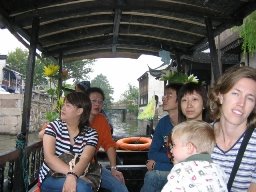
The canals aren't used much for transport these days, but they're popular for doing laundry, fishing, and making money giving gondola-style boat tours to visitors like us. The canal tour is a relaxing way to see the traditional China we often envision, with narrow streets and alleys, ancient stone bridges, and small shops and homes crowded around the canal.

Tuesday, September 19, 2006

Oktoberfest -- Chinese style

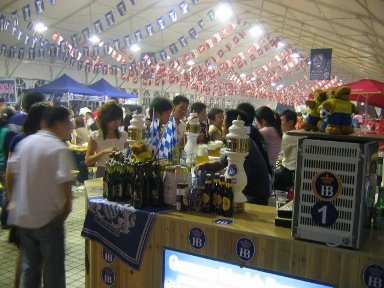
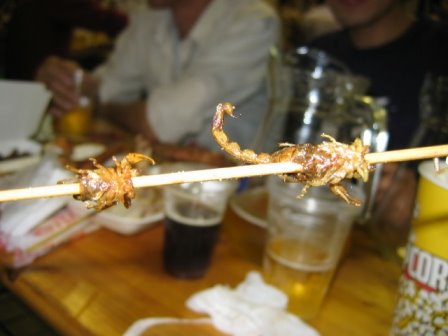
Imagine this: lots of beer, a sea of black-haired people, a live band playing The Rolling Stones and Pink Floyd, and exotic foods including whole squid on a stick, roasted silk worm, Asian-spiced crawfish and fried scorpion. It's Chinese Oktoberfest!

They don't call it Oktoberfest here, but Wushan Square, in the center of Hangzhou, is the site of a 12-day Beer (pijiu) Festival. That's right folks, you can swill German beer (Hoffbrau, Paulaner and Franziskaner, to name a few) and work up the courage to sample some bizarre Chinese food.

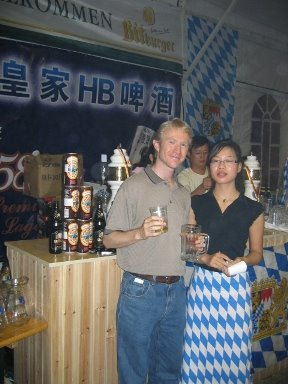
There are over 6 million people in Hangzhou, and a good number of them showed up this Tuesday evening to join the festivities. The beer maids don't quite look like the St. Pauli Girl, but they try their best with the Bavarian Flag skirts. I give 'em an A for effort.


My colleagues bought some "special" food for me. They were reluctant to try it themselves, but after I witnessed someone else swallow it and survive, I gave it a try too. That's right folks - I ate silkworm and scorpion. The silkworm had a crispy shell and (thankfully) no strong flavor. The scorpion? We tore off the tail first, and they tasted like any other crispy deep fried food.

Sunday, September 17, 2006

It's the little things

What I wouldn't give for...

Fitted sheets! They only have flat sheets here. I've heard you can have fitted sheets made if you go to the wholesale fabric market. You pay for the material and then they can turn that into fitted sheets for an extra $3.

A bowl of cereal. We eat A LOT of eggs for breakfast.

Straight hair. My hair is always frizzy in the humidity - and especially when it rains.

A good cup of coffee.

Silence. There is always noise here - and lots of it. The apartment complex pipes in music that it plays near the walkways at night. All the busses have videos playing on them all the time. Everybody has a cell phone and seems to be screaming into it all the time. I watched one man talk on his phone with it held far away from his head. I wanted to tell him that if he held it near his ear and mouth then both he and the person he was talking to could speak a little more quietly - but of course this would have required speaking Chinese.


Things I wish we could get in the US ...

A $5 massage

Somebody to clean my house for $3

Babysitting for $1/hour or day care for $100/month (full time, every day)

I suppose to sum it up - cheap labor.

Preschool - Chinese style

I have quite a bit of work right now which is not very good timing - but since my paycheck goes really far here it is worth it to keep working. The down side of this means that I need to find child care for Andrew so I can get some work done. There is a "kindergarten" just across the street from us and the facilities are beautiful. We put Andrew in the 4 year old class because the teacher in there speaks English. It's a bit of a challenge for Andrew to communicate with the other kids but he manages. I suppose it's a little like when I go to the store. There is only so much you need to verbalize to understand what is required. Overall I think he enjoys going and playing with the kids.

The kids all have clean shoes that are worn in the class room. Whenever they come in the morning or after play time outside they put on their inside shoes. This doesn't surprise me at all. However, One day while I was there observing they had an assembly. The kids came out of the class room and changed into their outside shoes, walked 100 feet or so down the hall to the meeting hall, and then took off their shoes all together to go into the assembly. They sent more time changing shoes than walking down the indoor hall. It was crazy.

The other really interesting thing was filling out forms. First of all, the spaces for the entries were very small. Since a Chinese character represents a whole word a typical name might have 2-4 characters. The 13 letters in Andrew's name took up an awful lot of space. We also had to write down what level of education Brad and I had, though I'm not sure why.

Saturday, September 16, 2006

Stinky tofu

What do you when you've got a slab of tofu that's past it's prime? So far past it's prime that it's partially fermented? You can't let it go to waste, so deep fry it and serve it up in the local restaurant! Stinky tofu (chao dofu) is a famous -- or infamous -- local dish. You hear about it soon after arriving and it seems to be obligatory to try it. I'd been warned, but my adventurous curiosity got the best of me and we ordered some last night. Well, the name of the dish is quite accurate, and it basically tastes like rotten tofu. A few people actually claim to like the stuff, though.

The musical street cleaner

The street cleaner here is a big tanker truck that blasts fat jets of water sideways to keep the streets clean. It also blares music, ala the ice cream truck back home, to warn unsuspecting pedestrians and cyclists, lest they get washed to the curb along with the debris. Inexplicably, one of the tunes they play is Happy Birthday to You.

Hupao Spring to Anji

Our first full weekend in Hangzhou (Sept 9 to 11) gave us a chance to see some sights in and around the city. On Saturday, we braved a steady rain to visit Hupao Spring, a place where the water is supposedly so good the locals will hike up the hill and fill jugs full of the stuff to take home. We saw one old man walking up with about a dozen 2-liter bottles hanging from a pole he carried on his shoulders. We stopped in a tea house for a cup of the local specialty, Dragon Well green tea, and heard some live traditional Chinese music while we sipped. After the performance, our little blond celebrity (see: Andrew is a Superstar) enchanted one of the musicians who let Andrew hammer on the big iron bells. Andrew sang Twinkle twinkle little star for her and she accompanied him on a traditional Chinese stringed instrument, something akin to a cello, I suppose.

Sunday, with nice weather, we went on a short hike through some hills to Good Luck park and Yellow Dragon Cave. Good Luck park on Sunday morning is an absolutely mad house. Five or six people were practicing their swordsmanship, waving real swords around as throngs of people walked by and 3 or 4 bands were playing and singing traditional Chinese music. The nearby Yellow Dragon cave was mostly a dud, but we did catch part of performance of traditional Chinese opera. Can't say I'm a fan.

Next stop was Hangzhou's famous West Lake, where Andrew and I strolled along the manicured pathways and dealt with the usual Andrew-paparazzi. Amy, in the meantime, enjoyed a $5 one-hour massage. This is a great place - they train blind people to do massage, where hopefully they make a decent living. Next was my turn for a massage!

The BoldTech office here had a day-long outing on Monday, and Amy and Andrew joined me. We took a 2-hour bus ride (after a 1-hour taxi ride) to the village of Anji, in an area of bamboo-covered mountains. Quite beautiful, although the views were a bit obscured by the every-present fog and pouring rain. The big attraction here is movie sets. A couple of recent big-name Chinese movies were filmed here, and the sets are still in place. Andrew made friends with the kids of a few other BoldTech'ers on the trip - Yaya and Chen Ju Qi, a girl and boy about Andrew's age. Most people who speak English adopt western names, and Chen Ju Qi used "Charlie".

We also joined some other ex-pat friends of ours for dinner on 2 nights. Axel and Kip live in our apartment complex. Axel is a German who works for a company he calls a "haberdashery" and his wife Kip is originally from Malasia. Both speak great English, and Kip also speaks good Mandarin, which is handy.

Five and half days of rain

For five and a half days, it's been raining or drizzling in Hangzhou, with only a few short breaks. I think it's the longest I've ever gone without seeing the sun, and there's no doubt it takes a psychological toll. Now it's Sunday morning and I can actually see blue (not gray) sky, and the sun is shining bright. Ah, the things we take for granted in Colorado.

Thursday, September 14, 2006

It's' the small differences

One of the things that makes traveling so intriguing is discovering all the differences between cultures. For instance...

Small appliances
All the appliances here are small. The fridge is about half the size of a standard American model. The washing machine is tiny, and it has a weight sensor, too. Throw in a single wet towel and nothing else, and it won't start. Did I already mention that we don't have dishwasher?

Laundry service
Due to the small appliances (see above), if you go more than a few days without doing laundry, it's gonna take a while - and a whole lot of tiny loads - to get it done. We decided to try a nearby laundry service, so we dropped off a bunch of clothes and linens. We got it back and all our shirts were pressed, folded and sealed in celophane, complete with cardboard stays for the collared shirts - just like a new dress shirt you buy at a department store. Same for Andrew's shirts, even. Each piece of underwear had a laundry tag sewed into it. The total for all that craziness was about $40 - a helluva lot more than I want to pay for laudry.

No diapers
What do you do with your toddlers if they're not toilet trained and you live in a country with no diapers? Simple! Put them in pants with an open crotch, and they can go whenever and wherever they want! Apparently it's socially acceptable - and not at all unusual - for small kids to just do their thing right on the sidewalk.

Traffic rules
  1. Might makes right. The biggest vehicle wins.
  2. If you wanna cross the street or make a left turn, you'd better have big cajones.
  3. The bus isn't full until it's physically impossible to cram another human body on board
No legal-size paper
Don't get me wront - I hate legal size paper. It doesn't fit anywhere. But today I wanted to print a quick reference sheet that was specifically designed to fit perfectly on legal size paper and fold into a nice little booklet. Forget it. They never heard of legal paper here.

Drainage
Most Chinese are unfamiliar with the modern home bathroom, or are only recently becoming acquainted with it. So it's not surprising, perhaps, that they haven't mastered the finer points of bathtub/shower drainage. For instance, you want the water to drain into the tub, not into the silicone-filled trough around the tub, which in turn drains onto the floor, which should then make a bee-line for the floor drain -- but only if the floor drain is at the low point of the bathroom floor, which it's not. Of course the result is a perma-puddle on the bathroom floor.

Fat pork
Lean meat might be all the rage in the good 'ol US of A, but not here. A favorite local dish is a hot chunk of pork, a cube about 1.5 inches on each side, which is 95% fat with a thin sliver of lean meat on one side and a thinner sliver of skin on the other, served in a little cup of melted pork fat. In fact, some of my colleagues who lived in the US said they sought out a specialty Asian market to satisfy their craving for fat pork. Artery-clogging goodness!

Sunday, September 10, 2006

Andrew is a Super Star

I know every one reading this thinks Andrew is cute - but the Chinese people go nuts over him. Brad says it's almost like they don't believe that white adults come from white babies, but mostly it's just because they don't see very many white babies. People are always touching him and having their picture taken with him and talking to him. At first he really ate it up, but it's gotten to the point where most of the time he wont even look at anybody who isn't speaking English.

The most extreme occasion was one day when Andrew was playing in the fountain in our apartment complex and a couple of people were near by. Pretty soon passers by stopped to watch and then people who had been on their balconies came down with their cameras and started taking pictures of him and calling their friends on the phone to tell them about this crazy white kid playing in the fountain. One of Brad's co-workers saw the whole thing from a nearby restaurant. I really didn't think much of it since I'd seen several Chinese kids playing in the fountain. Soon a lady told me that Chinese children would never run around in the fountain with their clothes on when the weather is like this. I suppose when I think about it all the kids I had seen before were naked and 80 degree weather was a dramatic drop from the first couple of days we were here.

Move over, Louvre!

Among the world's premier museums, world-class destinations such as the Louvre, the Met, MOMA, The British Museum, may come to mind. But there's a grand new challenger for the title of World's Best Museum, and it's right here in Hangzhou.


That's right, folks: the China Finance and Taxation Museum. You've been waiting for this your whole life. Call your travel agent today! Spare no expense! Bring the whole family for the dream vacation of a lifetime!

Wednesday, September 06, 2006

No Speeling

They range from amusing to inexplicable. All over China, you'll find billboards, street signs, shop fronts, clothing and product labels, all with jumbled English. Here's one from a bottle of Dynasty (it sure is nasty) red wine:
Constantly drinking this wine is good to your health
Or this stern notice at the exercise area in the courtyard outside our apartment:

Pood, prinks, and rigid objects are not allowed
And my favorite so far is this one, found on a short bridge over a pond in our aparment complex.


When Andrew saw this sign he asked, "what does that sign say?" (as he does for every sign he sees). So we told him "no speeling", to which he replied, "What happens if you speel?". Good question, Andrew...good question.

Update: my friend's wife, Olivia McCorkell, translated the Chinese characters. According to her, it says "No hurdling over".

Lunch - Fear Factor style

If you've ever seen the TV show Fear Factor, you've seen people eat some scary stuff. Eating in China can be an adventure, too. I went to lunch with a large group of colleagues today and we ate family style. Some of the dishes I sampled:
  • Spicy frog stew (in a broth packed with red chiles)
  • Pumpkin coated with a sauce of brined duck egg yolk
  • Spicy stew of unknown beef organs (my friends weren't sure, but they think the organs are from the cow's neck)
  • Chicken feet pickled in rice wine
Have you ever tried to eat chicken feet? Don't bother. As you might guess, there's not much but a few nibbles of chewy skin. And the mystery beef organs? Not bad, actually.

Monday, September 04, 2006

"Early in the morning, we all drink beer"

Those are the lyrics of a new song Andrew invented while eating dinner last night, sung to the tune of "Itsy Bitsy Spider". Maybe he'll be a rock star some day.

Saturday, September 02, 2006

Journey to Hangzhou

We arrived in Hangzhou around 6 pm Saturday, via Shanghai and Vancouver. We left the house at 5:20 am on Friday to meet my mom - who very generously volunteered to keep our dog and drive us to the airport. (Thanks, mom!) We had 3 big bags to check, each one of which just barely squeeked by under the 50 pound weight limit.

Thanks to an overzealous gate attendant in Denver, we almost missed the flight completely. You see, we got multiple-entry visas into China, with a maximum 60-day single stay. The gate attendant (let's call him Mr. Stickler) said we couldn't board the plane since our return flight on December 15 was more than 60 days away. With 30 minutes til departure, Stickler told us to go to the United customer service desk, where we were they told us they couldn't help - we had to pick up the phone to talk to someone else. The folks at the friendly skies of United said they couldn't help either, since we booked our itenerary with Air Canada (United operates this leg of the flight). So Amy and I split forces; I went back to the gate to work on Stickler while Amy tried to reschedule our return flight. At about the same time I convinced Stickler to let us on, Amy finally found someone who was willing to reschedule our return flight. With 10 minutes to spare, we boarded our plane to Vancouver.

Shanghai to Hangzhou
It's a 2-hour van ride from the Shanghai airport. Our driver, Shen Ming, didn't speak any English -- as expected, since few people here do. The section of Shanghai we saw was a sprawling jumble of enormous apartment buildings, interspersed with small plots of agricultural land, all obscured by a thick haze - mostly clouds, I think, but part smog too - that reduces the sun to a dull glow. In fact, when Andrew saw the sun through the fog, he said "look, it's the moon!"

I'm surprised by how modernized the country is here - even in the rural areas between the cities. Our aparment is across the Qiantang river from the city center in a booming new commercial district - akin to Denver's tech center, maybe. And I mean booming. There are probably a dozen high rises - both residential and office space - going up within a mile of our apartment, with crews working even at 7 am on Sunday and 6 am on Monday.

Our apartment is nice, and surprisingly roomy - 3 bedrooms and 2 bathrooms. Each room has an air conditioner with a remote control. Good thing, too; it was 36 Centigrade here today (that 's 97 Farenheit) with wicked humidity. We've got about every modern convenience, except a dishwasher. With so many options for cheap food nearby, we'll probably eat out a lot, though. We had our first meal here with Peter Liu, a co-worker who kindly helped us get oriented, at a nice restaurant. The bill for four of us was 138 Yuan, about $17, and that's probably 3 times what we'd pay at the typical local joint.

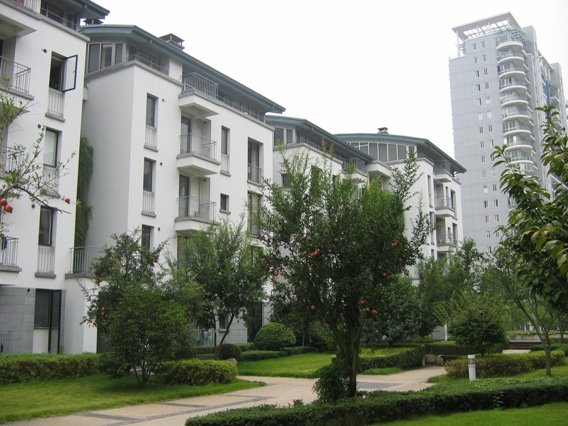
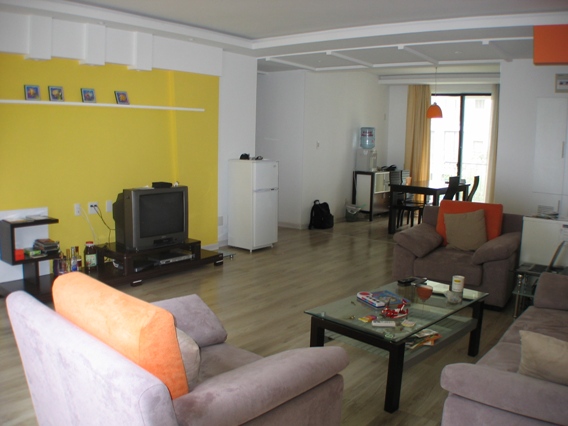
Here are views of our apartment.

Sunday, August 06, 2006

Asado

Quiz: What do you get when mix a bunch of retiree fly fishermen, some good-ol-boy ranchers, a handful of head bangers (one wearing a Slayer T-shirt), spouses, a gaggle of kids, lots of beer, and one very recently butchered goat strapped to a metal cross with baling wire?

Answer: my dad's annual New Castle Asado
(that's spanish for BBQ, more or less)

Dean (my dad) spent several weeks in Argentina a few years ago on -- what else -- a fly fishing trip, and he was inspired by their barbeque technique. Since then, he's held his own version
of it every summer in New Castle, on Colorado's western slope.

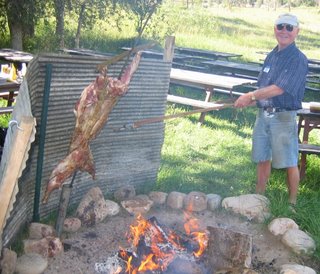
In the asado, the centerpiece (victim) is a whole kid goat, butchered, skinned, and strapped to a metal cross. The whole apparatus is placed between a wood fire and a wall of sheet metal to hold in the heat, and roasted for several hours. In case you're having trouble picturing such a thing, here's a photo.

The day started at 7:40 am, when my dad, his friend Doc and I drove a few miles up Elk Creek to Mike Dodo's ranch, where we procured one goat for a hundred bucks. A single .22 bullet through the brain quickly dispatched the goat, and Dean and Doc proceded to butcher it. It was the first time this city slicker has personally witnessed this ritual on anything larger than a fish. It's a worthwhile experience every meat eater should have, though.

So how does Dean end up with such a bizarre mix of guests? This is where his worlds collide: friends from church, long-time fly fishing buddies, former co-workers, a few fraternity brothers, and New Castle locals: ranchers, transplanted securities traders, ex-pilots, river guides, and head bangers (the New Castle Renegades, as they're affectionately known).

This diverse crowd had a great time, though. Good party, Dean!